
The Iran war impact on Dubai real estate is the question every serious investor is asking right now. And it is completely fair. When conflict escalates in the Middle East, money moves, decisions shift, and markets react.
But reaction is not the same as collapse. Dubai has absorbed regional instability before. It came through the 2003 Iraq War, the 2019 Saudi Aramco attacks, and the turbulence of 2020. Every time, investors who understood the market rather than feared it made the smarter call.
This guide walks you through what is happening in 2026, what it means for your investment, and the right questions to ask before making a move. If you are actively looking at properties in Dubai, this is the context you need.
Iran War Impact on Dubai Real Estate: Current Market Overview 2026
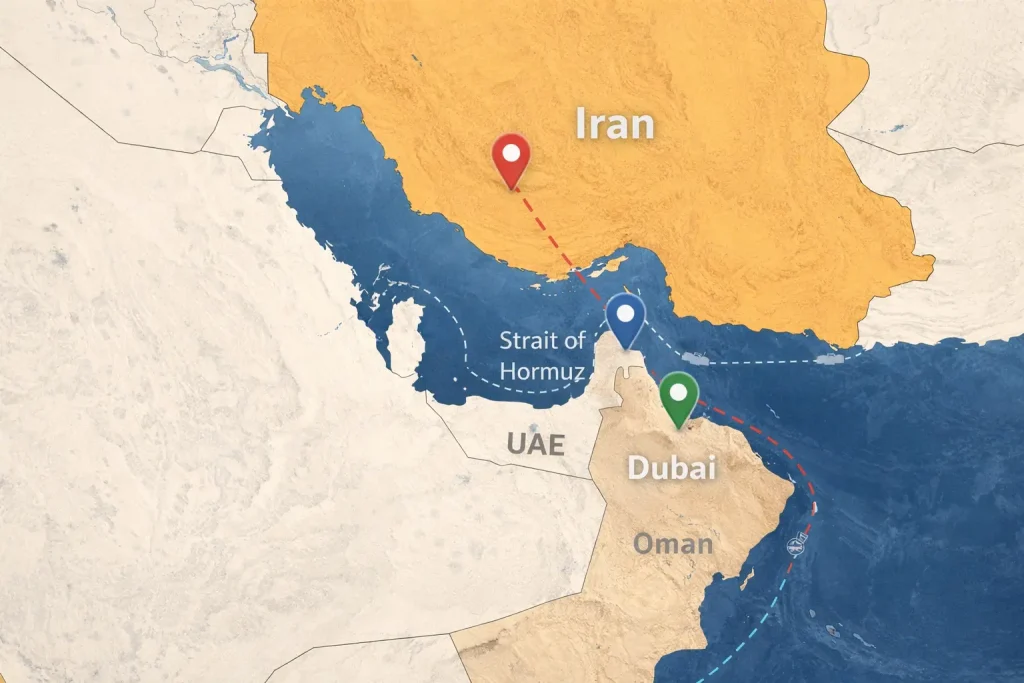
Since late 2025, Iran-related tensions have intensified through strikes, diplomatic breakdowns, and Strait of Hormuz threats. Regional media coverage has been heavy. And yes, investor sentiment in the Gulf has shifted. But the data tells a more nuanced story than the headlines suggest.
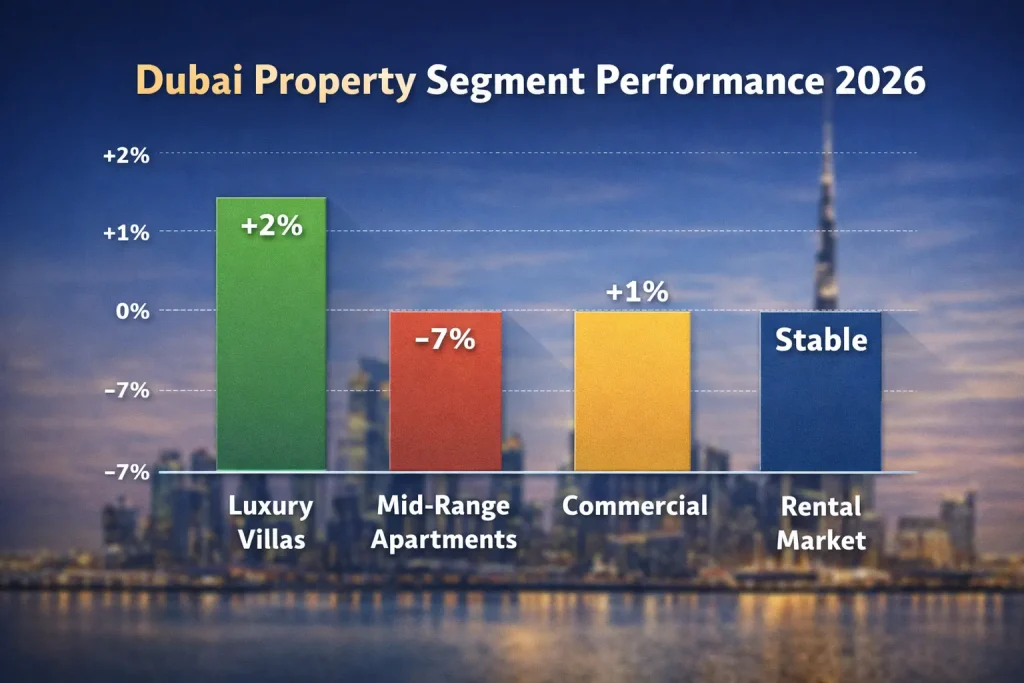
Here is a clear snapshot of where the Dubai property market stands right now:
| Market Segment | Current Status (2026) | Price Movement |
|---|---|---|
| Luxury Villas (Palm, Emirates Hills) | Stable. Long-term buyers holding firm. | 0% to +2% |
| Mid-Range Apartments (JVC, Business Bay) | Slight softness. More negotiation room. | -3% to -7% |
| Off-Plan Developments | Cautious. Buyers preferring completed units. | Lower inquiry volume |
| Commercial / Office Space | Demand steady. Businesses are not leaving. | Flat to +1% |
| Rental Market | Strong. More tenants as buyers wait. | Yields stable at 5-8% |
The market has not crashed. It has softened in specific areas. That is a meaningful difference. Think of it like a speedboat hitting choppy water. It slows down, it bounces. But the engine keeps running.
For investors actively browsing current Dubai listings, this table is your first filter for where to focus.
How Geopolitical Tensions Are Reshaping UAE Property Investment Trends
Geopolitical pressure does not just shift prices. It changes who is buying, what they are buying, and why.
Who Is Still Buying in 2026?
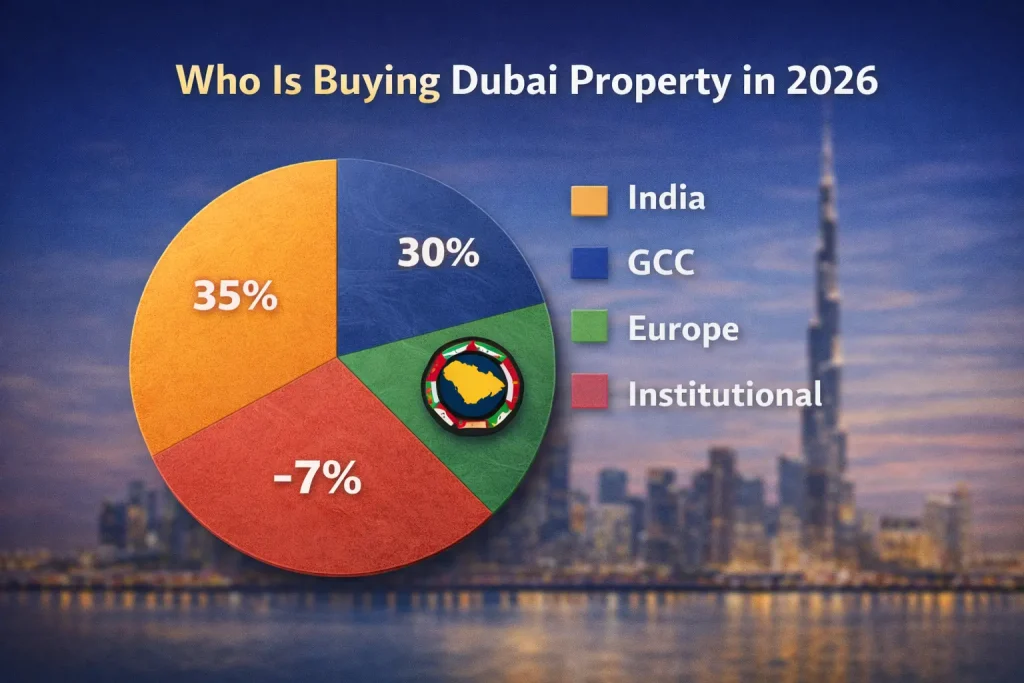
- Indian and South Asian investors are stepping up. They see current softness as a buying window, not a warning sign.
- GCC buyers from Saudi Arabia, Kuwait, and Bahrain remain active but increasingly selective. They favour completed, income-generating properties over speculative plays.
- European and North American investors are largely in a wait-and-see mode. They are watching, not walking away.
- Institutional buyers continue to acquire commercial and mixed-use assets, signalling strong long-term confidence.
What Are Buyers Choosing Right Now?
- Completed ready units over off-plan. Tangible assets feel safer when the future is uncertain.
- Rental-yield properties in areas like JVC, Arjan, and Business Bay. Reliable cash flow is the priority.
- Luxury assets from ultra-high-net-worth buyers. This segment barely blinks at regional headlines.
You can explore current options across these categories on the Versa Heights projects page. From Binghatti Hills Phase 2 starting at 550K AED to Sobha Creek Vistas Heights from 1.6M AED, a wide range of entry points is available right now.
Smart money does not always flee during uncertainty. Sometimes it consolidates into safer, higher-quality assets within the same region. Dubai is the blue-chip real estate market of the Middle East.
Dubai Real Estate Prices After Iran Strikes: What Investors Should Know
Here is how different property types have responded to the current tension period:
| Property Type | Price Trend | Buyer Sentiment | Recommended Action |
|---|---|---|---|
| Luxury Villas | Stable🟡 | Confident | Buy if budget allows |
| Mid-Range Apartments | -3% to -7%🔴 | Cautious but active | Negotiate hard. Good entry point. |
| Off-Plan | Flat / Discounted | Hesitant | Choose established developers only |
| Commercial Units | Flat to +1%🟢 | Stable | Strong long-term play |
Off-plan purchases are facing the most friction. Buying off-plan during uncertainty is like ordering a meal you have never tried at a restaurant that just got a health warning. You might still do it. But you want a better deal first, and you want to know the kitchen is solid.
If off-plan appeals to you, properties like Wynwood by Imtiaz from 2M AED and Bay Grove Residences Phase 3 are backed by established developers with strong delivery records. That track record matters more than ever in 2026.
UAE Property Sector Resilience: Can Dubai Weather Regional Conflict?
Can Dubai hold up? It already has, multiple times. And the structural reasons for that resilience are firmly in place.
Key Pillars of Dubai’s Market Resilience
- Diversified economy. The UAE is not an oil-dependent economy. Tourism, trade, logistics, finance, and technology drive a large share of GDP. The city keeps functioning even when oil prices and regional politics swing.
- Strong regulatory framework. RERA governs the market with clear, investor-protective rules. Foreign buyers can own freehold property in designated zones. That legal certainty keeps international capital flowing.
- Strategic neutrality. The UAE maintains diplomatic relationships on all sides of regional divides. This neutrality is a business asset. It keeps trade routes and investor channels alive.
- Physical distance from the conflict. The actual strikes and flashpoints have occurred well outside UAE borders. Physical risk to Dubai remains low.
- Zero income and capital gains tax. No tax on rental income. No tax on property gains. This financial environment is extremely rare globally and remains a major pull factor for international investors.
The UAE Government’s official investment framework reinforces many of these protections. Foreign ownership rights, residency through property investment, and transparent legal processes are all part of why Dubai consistently attracts capital during regional turbulence.
Think of Dubai like a well-built house near a noisy neighbourhood. There is disruption nearby. But the house itself is structurally sound, properly insured, and sitting on a solid foundation.
Investment Opportunities Amidst Middle East Uncertainty
Experienced investors know this well: uncertainty creates opportunity. Not for everyone. Not without risk. But for those who do the homework, periods of market hesitation are often the best entry points.
Right now in Dubai, four specific opportunities stand out:
1. Negotiating Power Has Returned
For two years, Dubai was a seller’s market. Prices climbed fast and buyers had little leverage. That has changed. Sellers are now more flexible. If you have been waiting for room to push below asking price, 2026 may be that window.
2. Rental Yields Are Holding Strong
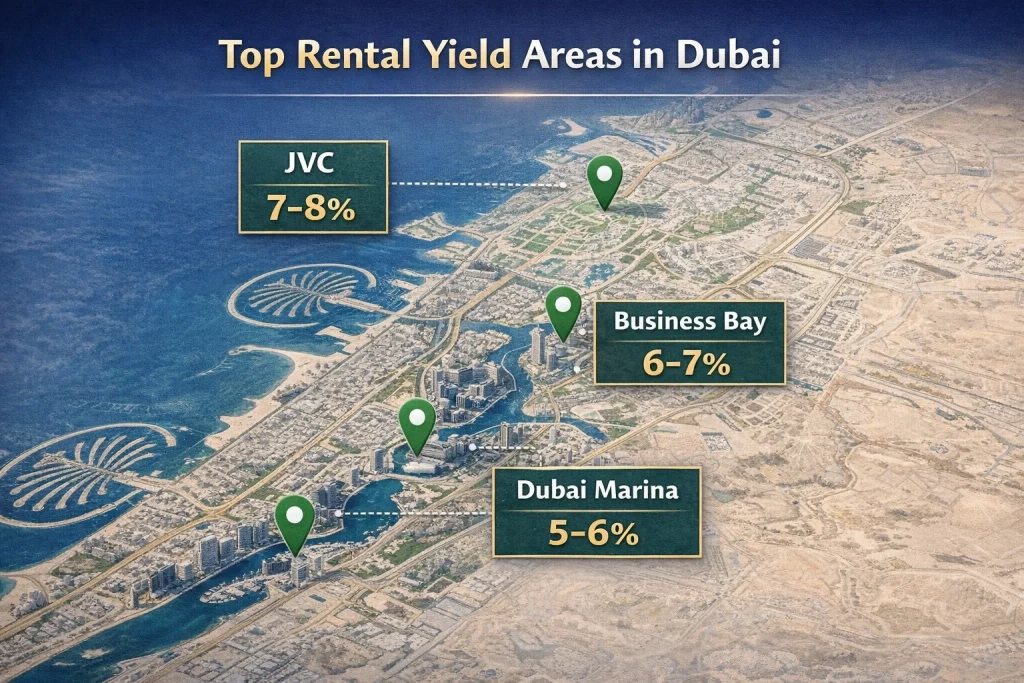
Rental demand has stayed firm. More people are choosing to rent while they wait out the geopolitical situation. This keeps occupancy rates and yields healthy. Areas like JVC, Business Bay, and Dubai Marina are seeing returns in the 5-8% range.
3. Safe-Haven Capital Is Flowing Into Dubai
Some global investors are moving money into Dubai during this period, not away from it. They see the UAE as more stable than other regional alternatives. This creates quiet upward pressure in premium segments even while mid-range prices soften.
4. Currency Stability Removes One Layer of Risk
The UAE Dirham is pegged to the US Dollar. There is no currency risk for dollar-based investors. In a world of volatile exchange rates, this is a quiet but significant advantage.
Get personalised guidance on which opportunity fits your goals by contacting the Versa Heights team. They provide dedicated investment consultation and market analysis services tailored to your budget and investment timeline.
Dubai vs Other GCC Markets During Regional Instability
How does Dubai compare to other Gulf markets when things get difficult? Here is a direct side-by-side:
| Factor | Dubai (UAE) | Saudi Arabia | Qatar | Kuwait / Bahrain |
|---|---|---|---|---|
| Foreign Ownership | Full freehold in designated zones | Limited, improving | Restricted | Very limited |
| Market Liquidity | High | Growing | Moderate | Low |
| Iran Conflict Exposure | Low to moderate | High (historical tensions) | Low | Moderate |
| Rental Yields | 5-9% annually | 4-7% | 4-6% | 3-5% |
| Residency via Property | Yes (Golden Visa) | Yes (Premium Residency) | Limited | No |
| Legal Transparency | Very high (RERA regulated) | Improving | High | Moderate |
On almost every factor that matters to international investors, Dubai leads. Better ownership access, higher liquidity, stronger yields, and the most established legal framework in the region. That combination is hard to match.
Browse Dubai properties across all budgets on Versa Heights, from entry-level options like Azizi Milan 51 from 600K AED all the way to landmark homes like Sobha Estates Villas from 30M AED.
Expert Predictions: Dubai Real Estate Forecast Post-Iran Tensions
Nobody has a crystal ball. But market behaviour during past Middle East conflicts gives us a useful playbook. Here is what analysts broadly expect:
Short-Term (2026): Cautious Stabilisation
- Transaction volumes will stay slightly below the 2024-2025 peak through mid-2026.
- Mid-range residential prices may dip a further 2-5% before finding a floor.
- Luxury segment holds. Long-term buyers do not react to short-term headlines.
- Off-plan activity stays slow until a clear de-escalation signal appears.
Medium-Term (2027-2028): Recovery and Growth
- If the situation stabilises, a strong market rebound is consistent with historical patterns.
- Investors who bought during the dips in 2003, 2009, and 2020 all saw meaningful gains within 18-24 months.
- Rental yields expected to hold at current healthy levels as population growth continues.
Long-Term (2029 Onwards): Structural Growth Intact
- Dubai’s population is growing. Its Expo-era infrastructure is in place. Tourism is recovering.
- The UAE government continues to invest in making Dubai a global hub. That trajectory does not reverse because of regional tensions.
- According to the Dubai Land Department, real estate transactions in Dubai have grown consistently year-on-year since 2020, one of the most sustained recovery stories globally.
A river keeps flowing toward the sea even when you throw rocks in it. The direction does not change.
Safety and Stability: Why Dubai Remains a Safe Haven for Property Buyers
Let us address the core question plainly: is it safe to invest in Dubai right now?
For most long-term investors, the answer is yes. With appropriate due diligence and clear eyes about the risks. Here is the evidence:
| Safety Factor | What It Means for Investors |
|---|---|
| Internal political stability | No civil unrest, no government risk, no threat to rule of law within UAE borders. |
| Strong defence posture | The UAE has strong security partnerships with Western powers and a proactive defence capability. |
| Zero income and capital gains tax | Rental income and property gains are not taxed. Extremely rare globally. |
| Golden Visa via property | Qualifying property investment can secure long-term UAE residency for you and your family. |
| World-class infrastructure | Top hospitals, international schools, DXB airport, and Jebel Ali Port drive real demand. |
| Freehold ownership rights | Foreign nationals can fully own property in designated freehold zones, protected by RERA. |
| Proven crisis resilience | Dubai rebounded sharply after 2003, 2009, and 2020. The pattern is documented and consistent. |
These factors do not make the market risk-free. No market is. But they make Dubai’s foundation solid even when the walls around it feel shaky.
For a comprehensive look at the UAE’s legal framework for property investors, the UAE Government’s official investment guide is a clear and authoritative starting point.
Ready to take the next step? The Versa Heights advisory team is available for personalised property consultations. Whether you are targeting luxury homes, income-generating apartments, or long-term portfolio plays, they can help you move with confidence in the current climate.
Frequently Asked Questions
1. What is the immediate impact of the Iran war on Dubai real estate prices?
Prices have softened moderately, particularly in mid-range residential segments. A 3-7% dip has been observed in areas like JVC and Business Bay. Luxury property prices have stayed largely stable. This is a market correction, not a collapse.
2. Are foreign investors pulling out of Dubai because of Iran tensions?
Not in significant numbers. Some Western investors are in pause mode. But Indian, GCC, and institutional buyers remain active. The market is seeing a shift in buyer composition rather than a mass exit from the market.
3. How does regional conflict affect rental yields in Dubai?
Rental yields are holding up well. In some areas, demand has actually increased because potential buyers are choosing to rent while they wait out the situation. Yields in key areas remain in the 5-8% range, which is among the highest globally for a market at Dubai’s stability level.
4. Is it safe to invest in Dubai real estate during Middle East instability?
For long-term investors, yes. Dubai has a documented record of absorbing regional shocks and recovering stronger. Short-term speculators face more risk in the current environment. The principle is simple: invest based on your horizon and risk tolerance, not on headlines.
5. Which Dubai property sectors are most affected by geopolitical risks?
Off-plan developments and mid-range residential units are the most sensitive. Luxury properties and completed income-generating units have held up best. Commercial real estate has been largely unaffected.
6. How is the UAE government protecting the real estate market from conflict fallout?
The UAE has maintained economic continuity, kept RERA regulations stable, and avoided any policy changes that could create investor uncertainty. There are no emergency restrictions on property transactions or capital flows. The institutional framework is functioning as designed.
7. Should I buy or sell Dubai property during current Iran tensions?
It depends on your investment horizon. Long-term buyers may find current conditions offer a better entry point than the peak of 2024-2025. Sellers with long timelines should hold if possible. If you need a personalised view, speak directly to the Versa Heights team for expert guidance.
Final Thoughts
The Iran war impact on Dubai real estate is real. It has introduced uncertainty, slowed some segments, and made buyers more cautious.
But it has not broken the fundamentals. Dubai still offers strong rental yields, zero property tax, world-class infrastructure, and a track record of recovering from regional shocks. Those things have not changed.
History shows that investors who understood Dubai’s resilience during past crises made better decisions than those who reacted to fear. This moment is no different.
Do your research. Work with people who know the market deeply. And make decisions based on facts, not fear.
Explore the latest Dubai listings at Versa Heights Real Estate. Or contact the team directly for a free, personalised investment consultation.


